
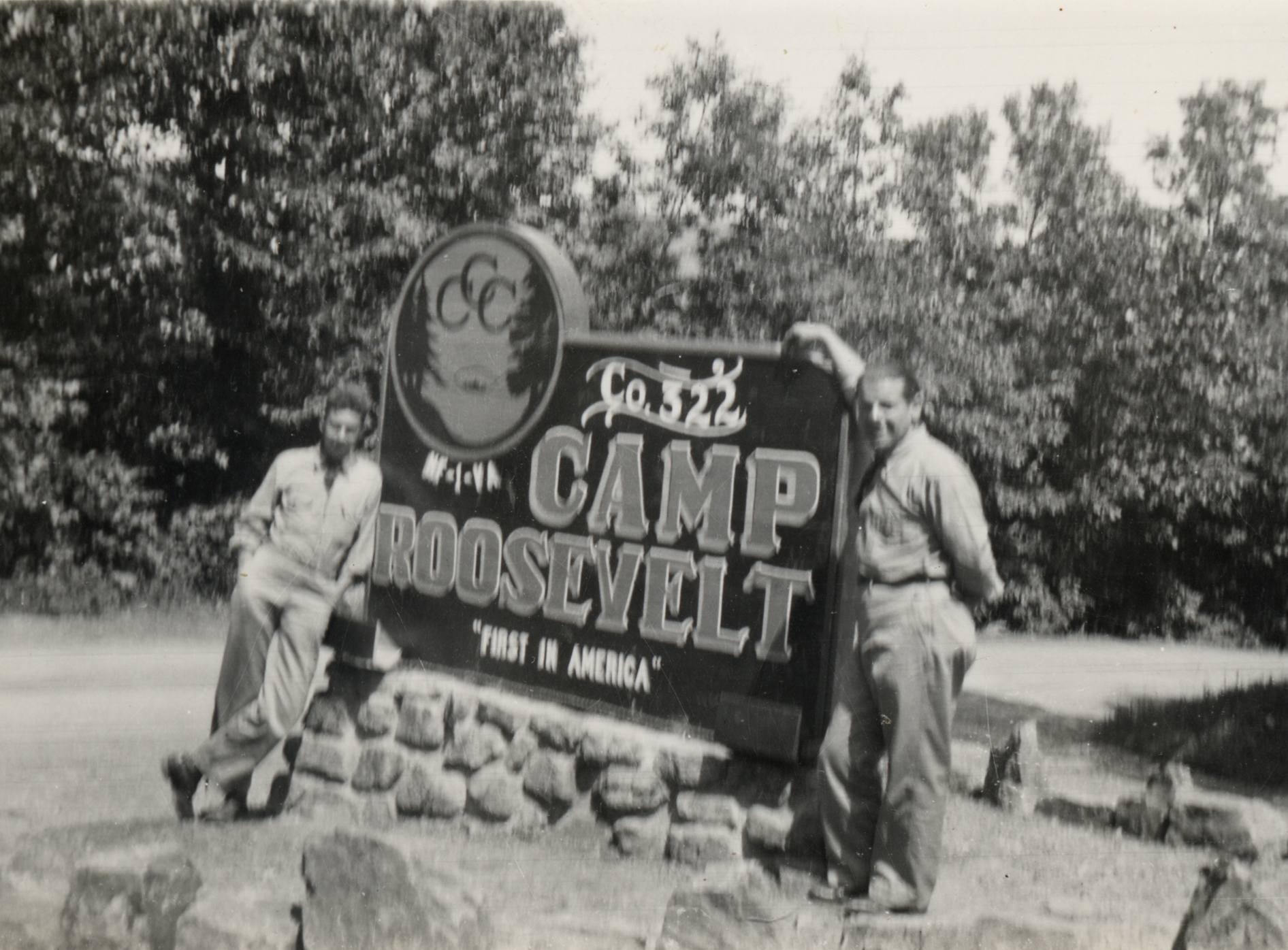
April 17, 1933
Born of Crisis, Built to Last
The New Deal
From Depression to Conservation
When Franklin D. Roosevelt took office on March 4, 1933, approximately 12 to 15 million Americans were unemployed — roughly one in four workers. About 54 percent of young men aged 17 to 25 faced unemployment or unsteady, meager work. Some 250,000 teenagers were estimated to be wandering the country's roads with nowhere to go. The nation's forests, meanwhile, had been stripped bare: only 100 million acres remained of an original 800 million acres of virgin forest, and 6 billion tons of topsoil were vanishing annually to wind and erosion.
Roosevelt's answer addressed both crises at once. On March 9, 1933 — five days after his inauguration — he called Congress into emergency session with a proposal to recruit thousands of jobless young men, enroll them in a peacetime military structure, and direct them toward combating the destruction of America's natural resources. Congress moved with unusual speed. Senate Bill S. 598, introduced March 27, 1933, passed both houses and reached Roosevelt's desk for signing on March 31 — just 36 days after he took office.
Executive Order 6101, signed April 5, 1933, appointed Robert Fechner — a Boston labor leader — as director and established an advisory council drawing from the Secretaries of War, Labor, Agriculture, and Interior. The Army mobilized what became known as "the most rapid peacetime mobilization in American history." By July 1, 1933 — fewer than three months after the order — 1,433 working camps were operating and more than 300,000 men were at work.
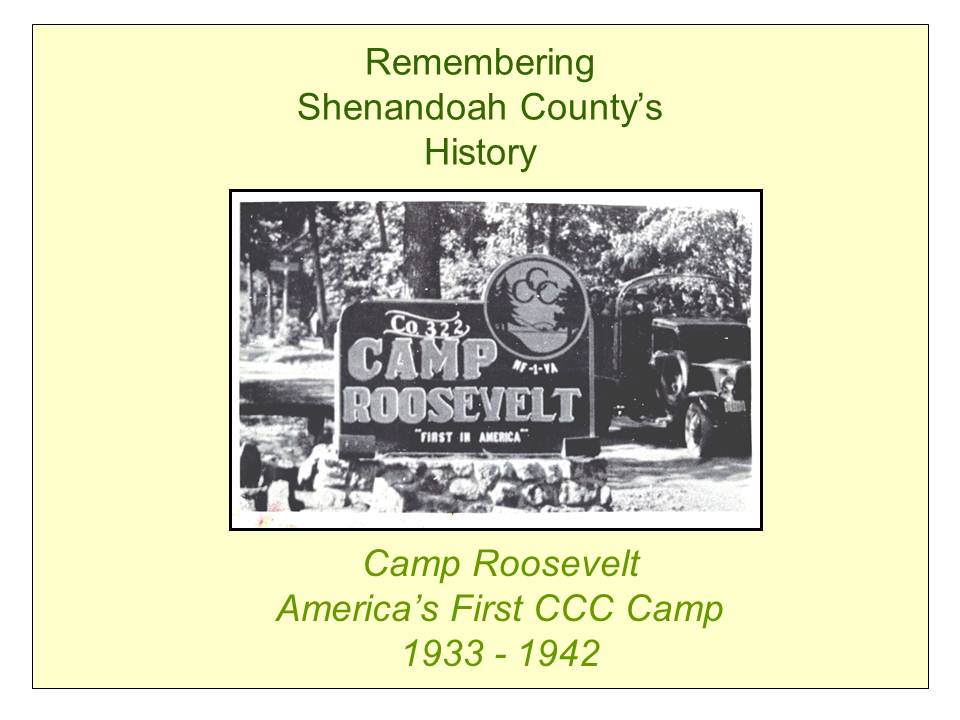
CCC mobilization, 1933 — from induction centers to working camps in a matter of weeks
NF-1
Camp Roosevelt — First in the Nation
The first quota — 25,000 men — was set for April 10, 1933. Camp Roosevelt opened April 17, 1933, on the George Washington National Forest near Edinburg, Virginia, in the Shenandoah Valley. It was designated National Forest Camp No. 1, the first CCC camp in the nation.
George Dant, who was among the first contingent to arrive, described the scene in a 1991 speech: approximately 200 men reaching a mountain clearing late in the afternoon, a single canvas-covered army truck in a ten-acre field, local mountain communities watching from the road. The supply convoy had separated and become lost. The only truck to reach the clearing contained folded canvas army cots — no food, no water, no blankets, no tents. The men had risen at 4:30 AM, left Fort Washington, Maryland at 9 AM, and received a brown bag lunch: one bologna sandwich, one hard-boiled egg, one cookie.
Rain and lightning developed. The cleared area, stripped of all foliage, offered no shelter. Mess Officer Sergeant Moose and cook Max Plotkin drove to town and "virtually depleted" surrounding communities of hot dogs, hamburger, salmon, and bread. A large van with blankets and tents arrived after midnight. In the days that followed, the entire clearing became a mud lake.
Local Experienced Men — skilled workers hired from surrounding communities — began arriving to teach inexperienced city boys essential skills. They became, as Dant described, "enrollees' newfound brothers, partners, friends, and fathers — teaching, training, guiding, and transforming city boys into men." Those same men would later serve in World War II.
"Never in history did a nation ever receive so much lasting value, for its investment, as that from the CCC. Many former enrollees of Roosevelt's Tree Army say that those were the happiest days of their lives. I agree, and I don't believe there will ever again be anything like it." — George Dant, Camp Roosevelt enrollee, speaking in 1991
25 Photographs
Camp Roosevelt — A Visual Record
Daily Life
Work, Discipline, and Transformation
By 1934, Camp Roosevelt had grown from tents to four barracks, each holding 48 men sleeping "head to foot" on iron cots and cotton mattresses, with two large coal stoves per barracks. By 1942, the camp had expanded to 24 buildings: six barracks, a recreation hall, education building, wash house, officer's quarters, infirmary, mess hall, Army office, garage, and truck shed.
Men rose at 6 AM, made their bunks, ate breakfast — Moon Mullins, who arrived in 1934, recalled the food: "I can't say it was like home-cooked, but we always had plenty." After breakfast, crews donned Army-issued heavy khaki work clothes and crossed to Forest Service headquarters for daily assignments. Camp Roosevelt crews built telephone lines, roads and bridges, planted trees, fought forest fires, stocked streams with fish, and built or improved Elizabeth Furnace Recreation Area, New Market Gap, and Little Fort Recreation Areas.
Workdays ran until 4:30 PM. Post-dinner, men were free. Weekly evenings found them in civilian clothes, driving trucks to Edinburg for movies and socializing. Regular Army fed troops at $0.45 per day; Camp Roosevelt received a $1.50 per day allowance. Typical dinner: frankfurters and sauerkraut, boiled potatoes, creamed carrots, peas, rice pudding, bread and butter, coffee.
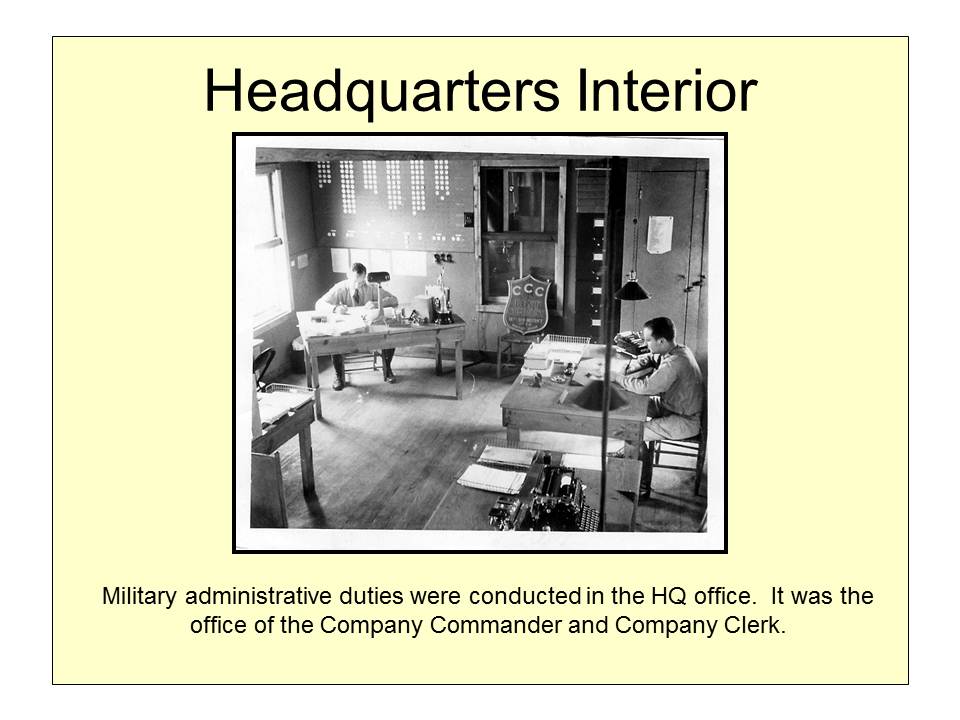
CCC crews built the infrastructure of the George Washington National Forest — roads, trails, telephone lines, and recreation areas still in use today
1942 and Beyond
After the War — the Site Remembered
Camp Roosevelt closed in 1942 as funding was curtailed and the nation's young men went to war. The site remained essentially abandoned for more than two decades. In 1964, Moon and Pearl Mullins — both former CCC enrollees — wrote Secretary of the Army John Marsh proposing that the site be converted to a recreation area. Within three days, Marsh replied in support. A 1965 special committee awarded $55,000; the Camp Roosevelt Recreation Area was completed in 1966, featuring 15 picnic sites, 10 camping units, and two public restrooms.
On February 4, 1941, President Roosevelt had signed an Executive Order designating the surrounding area the Robert Fechner Memorial Forest — naming the CCC's first director and honoring the program at the very site where it began. Camp Roosevelt NF-1 local reunions started in 1977. Moon Mullins and James Wilkins proved instrumental in organizing and maintaining them over 24 years.
The cleared mountain field where 200 young men waited in the rain for a supply convoy that never arrived — that became a place of memory, pride, and return. James R. Wilkins Sr., who served as Camp Roosevelt Superintendent from 1935 to 1940, put it plainly: "We worked long hours, and we put our heart and soul into it, and we loved it. With memories like those, how could they forget?"